

In this article
Your genetics set how thick your beard can get, and your age and hormones shape when it gets there. What you can control is how good the beard you have looks: give it time, keep the skin underneath comfortable, and shape it to suit your growth pattern.
This guide covers what actually decides beard thickness, a realistic timeline, a simple routine, what the evidence says about beard rollers, and what to do about patches. No miracle claims, just what holds up for men in Australia.
You cannot add follicles, and no product or supplement changes the number you were born with. You can make a beard look fuller by growing it out for 3 to 6 months, keeping the skin clean and moisturised, brushing daily and choosing a shape that suits your patches. Many beards keep filling in until around 30, so age is often on your side.
What decides how thick your beard can get?
Four things matter most, and only some of them are in your hands.
Genetics
Both Cleveland Clinic and Healthline name genetics as the main factor. It influences how thick the hair is, where it grows and when the beard reaches its full potential. If the men in your family have sparse cheeks, a dense beard is unlikely, and no product changes that.
Hormones
Testosterone, and the DHT it converts into, drive facial hair, but how strongly your follicles respond is also largely inherited. Both sources say normal testosterone is unlikely to be the reason for a thin beard. Clinically low testosterone is different and can reduce facial hair. If you have other symptoms, such as low sex drive or tiredness, talk to your GP rather than self-treating or buying supplements that promise a fix.
Age
Facial hair thickens gradually after puberty. A 19-year-old with a patchy beard can look very different at 25 or 30. Comparing yourself to older men or filtered photos sets you up for disappointment.
Skin, sleep, diet and stress
This is where you have some influence. Cleveland Clinic lists poor diet, vitamin deficiencies, stress and sleep deprivation as factors, though the research is small and no lifestyle change is proven to boost beard growth. What a routine can do is keep skin comfortable and hair looking its best.
Which beard myths should you ignore?
How long does it take to grow a thicker beard?
Plan on three to six months before you judge it fairly. Beard hair grows slowly and different follicles wake up at different times. For a closer look at timing, see how long it takes to grow a beard.
Stubble, itch and gaps
This is where most men give up or trim. Patches look at their worst here.
Shorter hairs catch up
Lighter, slower hairs lengthen and gaps often look smaller than they did at week four.
Your real shape shows
You can now see true density, where it grows best and which style suits it.
Not sure where to start? Our free 60-second routine quiz matches a simple routine to your beard and skin.
How to grow a thicker-looking beard: step by step
Step 1: Hold off trimming for 8 to 12 weeks
Hair that looks sparse at week three is often still emerging. Tidy only the neckline and cheek line if you must, and let the full picture develop.
Step 2: Wash gently
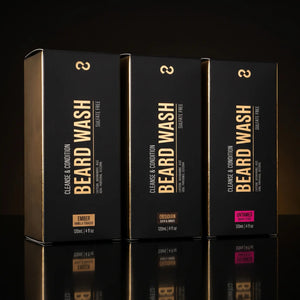
Body wash can leave facial skin tight, especially in Australian summers and air-conditioned offices. Our Beard Growth Wash is sulfate-free, made in Australia, and contains caffeine, niacinamide, aloe vera and panthenol. Two to three washes a week suits most men, with a water rinse on other days.
Step 3: Moisturise the skin underneath
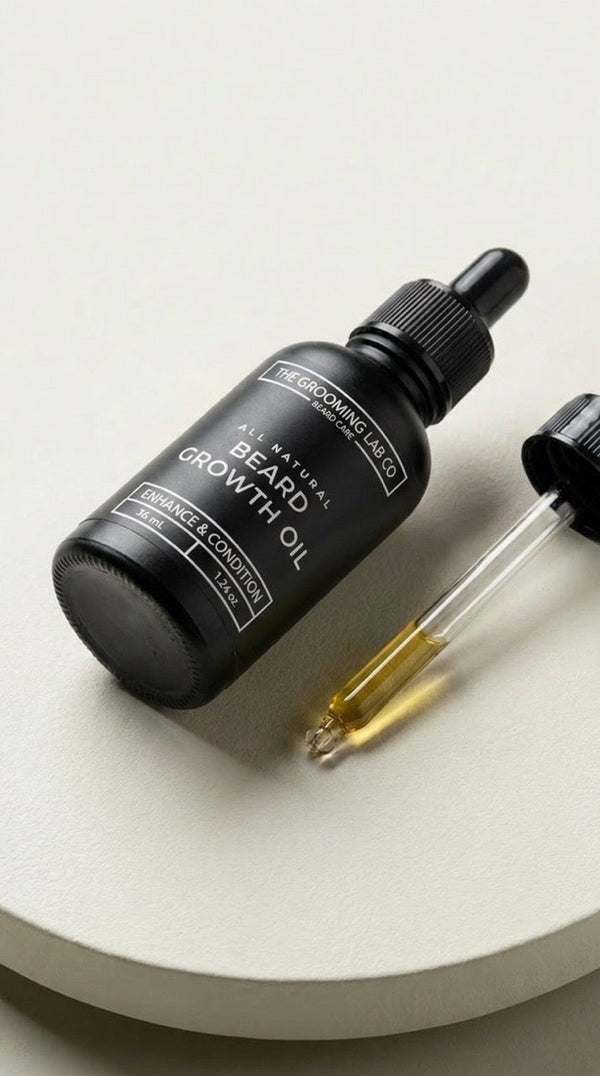
Healthline notes that moisturising the skin under the beard is beard oil's best-supported job, and that it can make a scraggly beard look fuller. A few drops of our Beard Growth Oil (jojoba, macadamia, vitamin E and zinc) on a damp beard does that. It contains macadamia, a tree nut. Not sure whether you need oil or balm? Read beard balm vs beard oil.
Step 4: Brush daily
Brushing spreads oils from root to tip and trains hairs to lie in one direction, so the beard looks more even. Browse the tools collection for brushes and combs.
Step 5: Add balm once there is length
A little Beard Balm adds light hold and conditioning so stray hairs sit together. It contains shea butter, beeswax, jojoba, argan, sweet almond (a tree nut) and vitamin E.
Step 6: Decide on a roller
This one is optional. Read the next section first.
Take a photo in the same light on the same day each month. Beards change too slowly to judge in the mirror, and a photo stops you quitting at week four.
Our complete beard care routine lays out a weekly rhythm you can follow.
Does a beard roller help thicken a beard?
The honest answer is that nobody has shown it does. Healthline says microneedling is well established for skin health and has some research behind it for scalp hair, but little study has looked at beards. A hair clinic's guide to beard rollers calls the beard evidence scant and the theory mixed among experts. Healthline's article also mentions minoxidil, and says the research on it for facial hair is limited. Minoxidil is a medicine, so speak to a GP or pharmacist before considering it.
We do not claim a roller makes a beard grow. Some men use one as a routine step, and if you do, the safety side matters more than the promise.
Do
- Wash first and roll on clean skin.
- Clean the roller before and after, with a dedicated roller cleanser.
- Use light pressure and stop if skin is irritated.
- Replace the roller as directed, since worn needles can damage skin.
Don't
- Use it on broken, inflamed, infected or acne-affected skin.
- Press until you bleed. Healthline says that means too much pressure.
- Share your roller.
- Skip your GP or dermatologist if you have a skin condition.
Our Beard Growth Roller is 0.5mm with 540 titanium microneedles, used every third evening followed by beard oil. Healthline suggests 0.5mm needles no more than once or twice a week, so start at the gentle end and back off if skin is red or sore. For a fuller look, read does derma rolling actually work on beards.
What should you eat and do for better beard health?
Hair is mostly protein and it is one of the first things the body deprioritises when you are run down. You do not need a special diet, just a sound one.
- Lean protein such as eggs, fish, chicken, beans and nuts. Cleveland Clinic suggests avoiding fad diets.
- Plenty of fruit and vegetables, plus healthy fats from fish, nuts and olive oil.
- Regular exercise, and sleep you can rely on.
- Stress managed where you can. Cleveland Clinic links stress to temporary hair loss.
- No smoking, which Cleveland Clinic says can harm skin and hair.
Be wary of supplement brands promising a thicker beard. If you suspect a deficiency or a hormonal issue, a blood test through your GP is the reliable route.
Why is my beard patchy and what can you do about it?
Patchiness is very common. Many men grow thicker hair around the mouth than on the cheeks, and cheek density is largely down to genetics and age. Here are practical options, from least to most change.
Young or still filling in
Grow it out for three to six months and see. Length hides gaps, and many beards that look thin at 5mm look fuller at 20mm.
Gaps on the cheeks only
Keep a clean cheek line and neckline and let the strong areas lead. Brushing and balm help hairs lie together.
Sparse growth overall
A neat, even short beard or heavy stubble usually beats a half-grown full beard. Healthline also notes a goatee or moustache can suit.
Sudden, round bald spots
See your GP or a dermatologist. Both clinics mention alopecia areata, an autoimmune condition that needs proper assessment.
See your GP if a change in your beard is new, unusual or lopsided, if hair loss comes with scaling, redness or itching, or if you have symptoms of low testosterone. No grooming routine is a substitute.
Itch in the early weeks is normal. If it persists, our guide to stopping beard itch and beardruff will help.
What about minoxidil and supplements?
You will see both mentioned online, so here is where the sources land. Healthline says the only study it found on minoxidil for facial hair showed about a 3 percent improvement over placebo, and calls the evidence limited. Cleveland Clinic says hair regrowth products are not approved to grow beard hair and can cause dermatitis or unwanted hair growth elsewhere.
Minoxidil is a medicine, so this is a conversation for your GP or pharmacist, not something to start because a forum said so. We do not recommend a dose or brand. Our products contain no minoxidil and make no claim to grow hair.
Supplements deserve the same caution. Healthline lists vitamin D and zinc supplements among possible supports, but the evidence is thin, and a balanced diet covers most people. If you suspect a deficiency, get it tested rather than guessing.
The useful takeaway is that nobody has found a reliable shortcut. That is why the sensible plan is boring: time, healthy skin, a tidy shape and, if something seems off, a doctor.
Is a beard growth kit worth it?
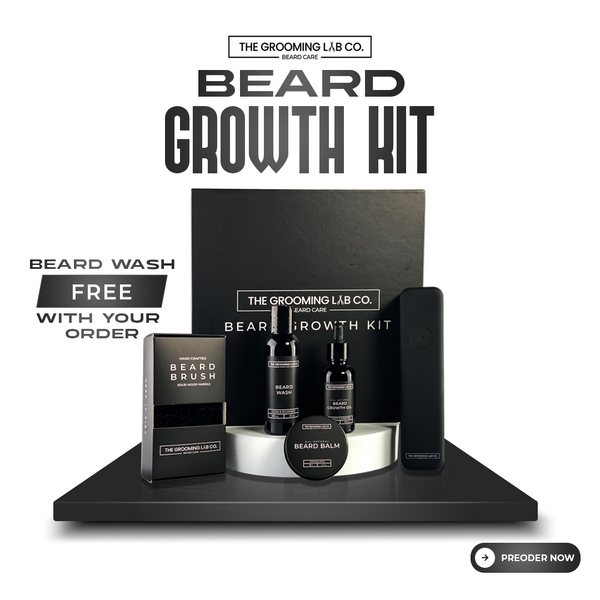
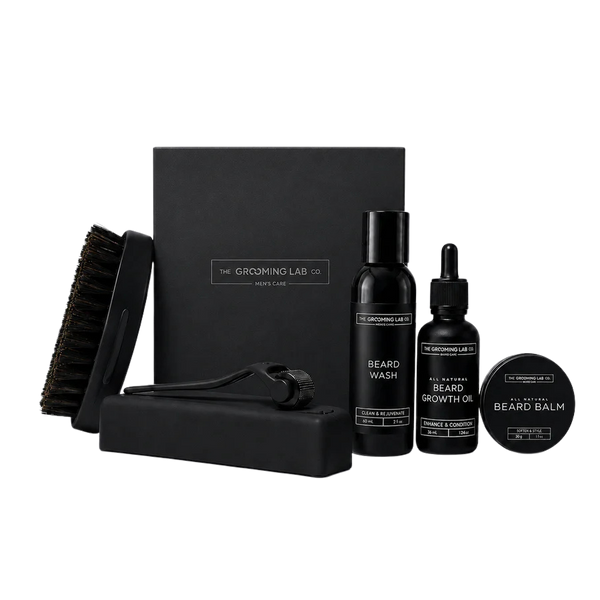
A kit is worth it if you want a complete routine without piecing it together. The Beard Growth Kit is a four-step routine of roller, oil, balm and wash, plus a brush, in 60, 90 and 120-day sizes. It has no minoxidil and needs no prescription. Every kit carries a 150-day money-back guarantee, and orders over $100 ship free within Australia.
It will not override your genetics. What it does is make the routine simple to repeat, which is the part many men get wrong. Prefer to build your own? See the beard growth collection, or read kit vs individual products.
Mistakes that keep a beard looking thin
| Mistake | Why it hurts | Do this instead |
|---|---|---|
| Quitting at week four | The awkward stage is where most beards are lost | Commit to 90 days before judging |
| Washing daily | Dries skin and makes gaps more obvious | Two to three washes a week, water rinse between |
| Skipping moisturiser | Tight, flaky skin shows through a thin beard | A few drops of oil on a damp beard |
| Trimming the length early | Resets progress and exaggerates patches | Tidy edges only for 8 to 12 weeks |
| Chasing quick fixes | Nothing overnight changes follicle count | Be sceptical and give it months |
Your face has its own pattern. Work with it rather than against it.
Want the full picture on follicles and growth cycles? Read the science behind beard growth.
How long does it take to grow a thicker beard?
Plan on three to six months of untrimmed growth before judging it. The first month usually looks patchy. Genetics, age and hormones set how thick it can get, and many men find their beard keeps filling in until around 30, so some fill in faster and some keep thickening into their thirties.
Can you actually make your beard thicker?
You cannot add follicles, because the number you have is set by genetics. You can make a beard look fuller by growing it out, keeping skin clean and moisturised, brushing daily and shaping it to suit your growth pattern. Patience and consistency matter more than any single product.
Why is my beard patchy?
Patchiness is usually down to genetics, age and uneven follicle density, and it is very common. Many men have thicker hair around the mouth than on the cheeks. Dry skin can make gaps more obvious. If you see sudden round bald spots or scaly, inflamed skin, see your GP or a dermatologist.
Does beard oil help a beard grow?
Beard oil has not been shown to make hair grow faster. Its best-supported job is moisturising the skin under the beard, which can reduce dryness and itch and help the beard look fuller and feel softer. It works best alongside a gentle wash, daily brushing and patience.
Does a beard roller work for a thicker beard?
Evidence for beard rollers is limited, and little research has looked at beards specifically. Some men use one as a routine step. Keep it clean, replace it as directed, use light pressure and never use it on broken, inflamed, infected or acne-affected skin. Speak to a GP or dermatologist if you have a skin condition.
Should I trim my beard while it is growing?
Try to avoid trimming the length for the first 8 to 12 weeks so you can see how it truly fills in. You can tidy the neckline and cheek line. Trimming the length too early makes patches look worse and resets your progress.
Does low testosterone cause a thin beard?
Normal testosterone is unlikely to be the reason for a thin or patchy beard, and follicle sensitivity and genetics usually matter more. Clinically low testosterone can reduce facial hair and usually comes with other symptoms. If you are worried, talk to your GP rather than buying supplements.
This article is for general information about our products and ingredients. It is not medical advice. If you have a skin condition or allergies, talk to your doctor before using a new product.