
In this article
If you are staring at your jaw in the mirror wondering how long does it take to grow a beard, here is the honest version. For most men it takes about three to four months to see a beard that looks properly intentional, and up to six months or more to judge your full potential. Some men get there faster. Some take longer. Both are normal.
This guide walks through realistic week-by-week and month-by-month expectations, what actually sets your pace, and what you can do while you wait. No promises, no hype, just what tends to happen.
Facial hair typically grows about 0.3 to 0.5 mm a day, so roughly 1 to 1.5 cm a month. Expect stubble in days, a visible beard in four weeks, and a full, shapeable beard in three to six months. Genetics, age and hormones set the ceiling, and patchy phases are a normal part of the process.
How long does it take to grow a beard? The quick timeline
Here is the rough picture most men experience. Your own timeline will shift a little either way.
- Days 1 to 7: stubble appears. Skin can feel a bit prickly.
- Weeks 2 to 4: short, soft hair. You can see where it is dense and where it is sparse.
- Months 1 to 2: the awkward middle. Length is there, but the shape is not.
- Months 2 to 3: patches begin to fill in and the beard starts to look intentional.
- Months 3 to 6: full length, a settled shape and a clearer idea of your true density.
- Months 6 to 12: some men keep thickening in the cheeks and chin well past the six month mark.
The key point is that a beard is judged at around the three month mark, not the three week mark. Most men quit at week three because that is when it looks its worst.
Week by week beard growth stages
Week 1: stubble and itch
Short hairs have sharp, cut ends, which is why a new beard can itch. This is usually the most uncomfortable stretch. Keep skin clean and comfortable, and resist the urge to scratch hard.
If itch is the thing derailing you, our guide to how to stop beard itch and beardruff covers it in detail.
Weeks 2 to 3: the mapping stage
By now you can see your real growth pattern. You will notice which areas come in thick (often the chin and moustache) and which are lighter (often the cheeks and the area under the lower lip). Do not judge the result yet. Hairs grow at different speeds, so a patch today can look different in a month.
Week 4: the first honest look
At four weeks you have roughly a centimetre or so of hair. That is enough to see a rough outline, but not enough to style. Hold off on big decisions about the neckline and cheek line until you have more to work with.
Month by month beard growth expectations
Month 1 to 2: the awkward phase
This is where most men give up. The hair is long enough to look untidy but short enough that it does not lie flat. You may see stray hairs, uneven length and a fluffy texture. It is a phase, not a verdict.
Month 2 to 3: shape starts to appear
Slower hairs catch up and the beard begins to read as one piece rather than scattered strands. This is a good time for your first tidy up. Keep trims light, and only clean up obvious strays and the neckline.
Month 3 to 4: the turning point
For many men, this is when the beard looks like a beard. Density becomes clearer, and you can decide whether you are building a short boxed style or aiming for more length.
Month 4 to 6 and beyond
Your beard reaches a length and fullness that reflects your genetics. Some men notice the cheeks and chin keep filling for a good while longer. If you have gone six months and are still unhappy, that tells you something useful about your natural density, and a shorter, well kept style may suit you better.
How fast does facial hair grow?
Facial hair is often cited as growing around half a millimetre a day, which works out to roughly 1 to 1.5 cm a month. That is an average. Individual speed varies, and it is not something you can dramatically change.
Every hair also goes through its own cycle of growing, resting and shedding. Because each hair is on its own schedule, a beard fills in unevenly at first. If you want the background, our article on the science behind beard growth explains the growth cycle in plain language.
What affects how fast your beard grows?
A handful of factors decide both your speed and your final density. Some you can influence, and some you cannot.
Genetics
This is the big one. The pattern, thickness and speed of your beard are largely inherited. Looking at the men in your family, on both sides, gives you a fair preview. No product changes your genetic blueprint.
Age
Many men find their beard keeps filling in through their twenties and into their early thirties. If you are 18 or 19 and your cheeks are sparse, that does not mean they will stay that way. Time is often the most useful variable.
Hormones
Androgens such as testosterone and its by-product DHT play a major role in facial hair, and how your follicles respond to them is partly genetic. If you have concerns about hormones or sudden changes in your hair, speak with your GP rather than guessing.
Diet, sleep and stress
Hair is made from protein, and your body needs adequate nutrients to maintain healthy hair. A balanced diet with enough protein, plus decent sleep and manageable stress, supports your general health and how your hair looks and feels. These are background habits, not shortcuts. If you suspect a deficiency, a GP can check properly.
Skin health and grooming habits
Hair grows out of skin, so comfortable, clean skin matters. Over-washing, harsh products and scratching can make the experience miserable, even if they do not change the hair itself. A gentle routine keeps you comfortable enough to stick it out.
Why is my beard patchy, and will it fill in?
Patchiness is extremely common, especially in the first few months. There are two main reasons. First, hairs are at different stages of their cycle, so some have not yet emerged. Second, some areas are genetically sparser than others.
Here is a sensible way to think about it:
- Give it at least 8 to 12 weeks before you decide anything.
- Take a photo on the same day each month in the same light, so you can see slow progress.
- If patches remain after three to four months, work with them. Keep the length even and choose a shape that suits your density.
- If you notice smooth, round bald spots appearing suddenly, or you have red, flaky or sore skin, see a GP or dermatologist.
Patchy does not always mean permanent. But it also does not always fill in, and that is a genetic call we cannot change. Our deeper guide on how to grow a thicker looking beard covers the habits that help it look its best.
What to do while you wait for your beard to grow
You cannot rush follicles, but you can make the waiting easier and the result look better. This is where a simple routine earns its place.
Wash gently and not too often
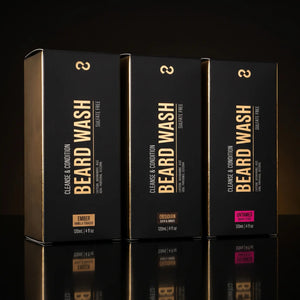
Use a beard wash, not body wash or harsh soap, which can leave skin and hair feeling dry. Many men do well washing a few times a week. If you are not sure, read how often you should wash your beard. Our Beard Growth Wash is sulfate-free and made in Australia.
Moisturise skin and hair
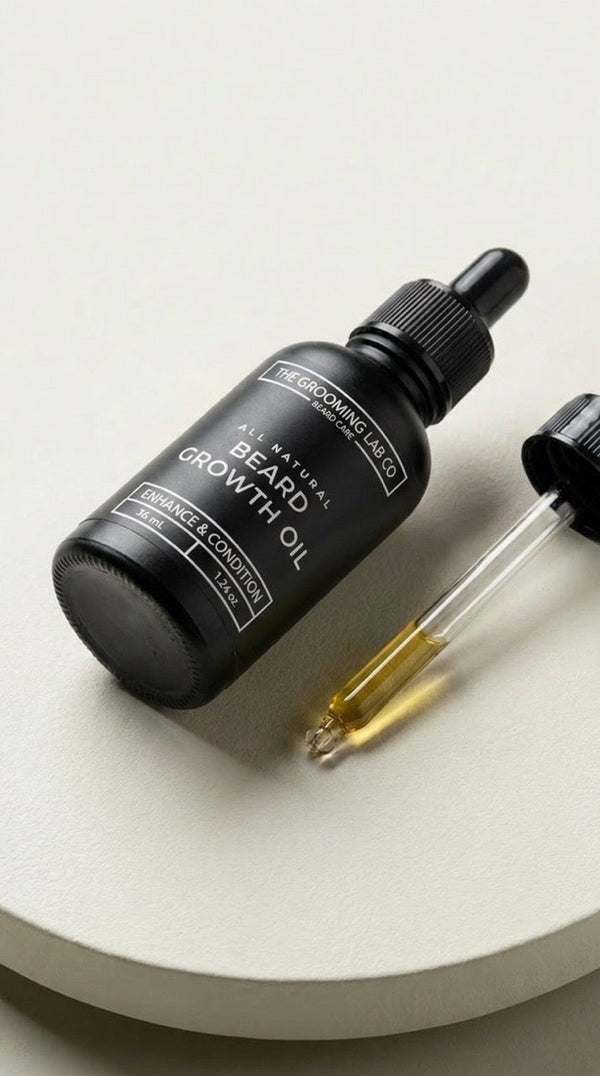
A few drops of oil on clean, slightly damp skin and hair help the area feel comfortable and look healthier. Our Beard Growth Oil is made with jojoba, macadamia (a tree nut), vitamin E and zinc. It is a routine step that supports healthy-looking skin and a fuller-looking beard, not a growth treatment. If you are unsure which to pick, see beard balm vs beard oil.
Brush and comb daily
Brushing trains the hair to lie in one direction, spreads natural oils and lifts away flakes. It also makes the awkward phase look far more deliberate. A soft beard brush is a good place to start.
Consider a roller, with care
Some men add a 0.5 mm roller to their routine. Evidence on rolling beards is limited, so treat it as an optional routine step rather than a fix. Keep it clean, replace it as directed, and never use it on broken, inflamed or infected skin. Read our honest take on whether derma rolling works on beards before you decide.
Trim less than you think
Resist the urge to shape too early. Remove strays, tidy the neckline a finger or two above the Adam's apple and leave the rest alone. Cutting the cheek line too high in month two is the most common regret.
Protect your skin through summer and winter
In an Australian summer, heat, sweat and sun can leave skin under a beard feeling irritated. In cold, dry months and air-conditioned offices, skin and hair can get dry and tight. Adjust how often you wash and moisturise with the season.
Do beard growth products speed things up?
This is where we want to be straight with you. No oil, wash, balm or kit can override your genetics or guarantee faster hair. Anyone who tells you otherwise is overselling.
What a good routine can do is look after the skin the hair grows from, keep you comfortable through the itchy stage, and help the hair you do have look thicker, softer and healthier. That makes it easier to stay patient long enough to find out what your beard can really do.
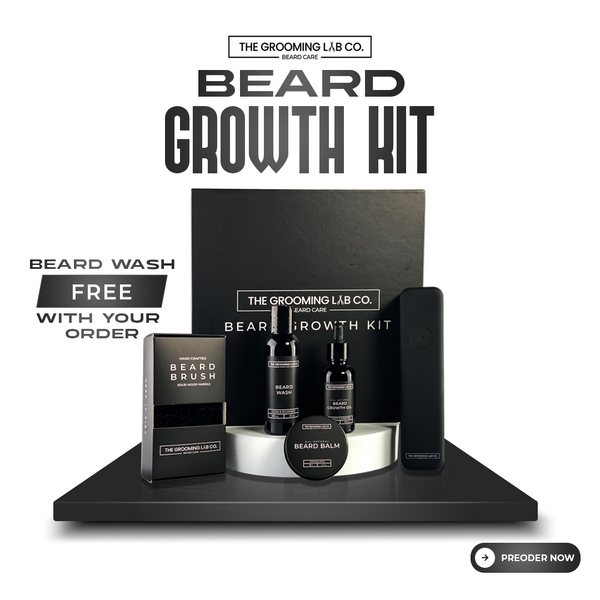
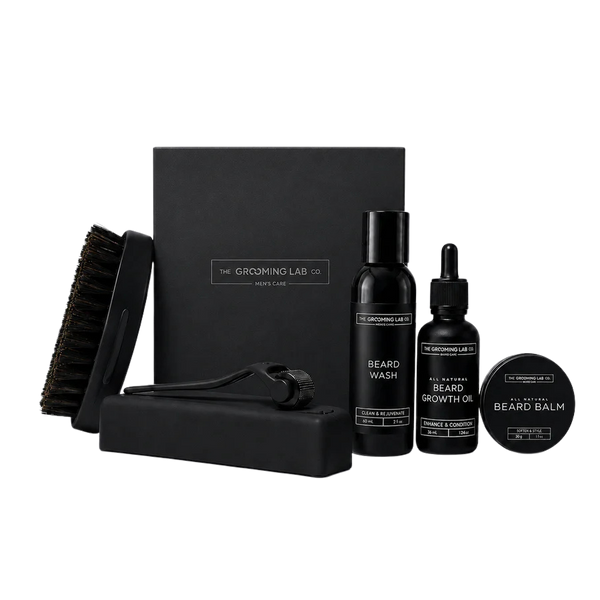
If you would rather buy everything in one go, our Beard Growth Kit bundles the wash, oil, balm, 0.5 mm roller and brush, and it is covered by a 150-day money-back guarantee. For a breakdown of what each step is for, read what is inside the kit, or see kit versus individual products.
When to keep going, and when to see a professional
Most of the time, slow or patchy growth is simply how your genes work. But it is worth getting checked if:
- You have sudden, round, smooth patches where hair used to be.
- Your skin is persistently red, scaly, painful or has pustules.
- You are well past your early twenties, have no growth at all and have other symptoms that concern you.
A GP or dermatologist can look at the cause properly. This article is general information and not medical advice.
A realistic plan for your first 90 days
Here is a simple approach that keeps you out of trouble.
- Weeks 1 to 4: do not trim. Wash gently, moisturise, brush daily.
- Weeks 5 to 8: remove only obvious strays and define the neckline lightly.
- Weeks 9 to 12: take a progress photo, decide on a shape, and start light maintenance trims.
Keep the whole routine consistent. A routine you follow beats a perfect routine you abandon. Our complete beard care routine lays out the full daily and weekly rhythm.
How long does it take to grow a beard?
Most men see a visible beard in about four weeks and a full, shapeable beard in three to six months. Facial hair tends to grow around half a millimetre a day, though speed varies. Genetics, age and hormones decide how thick it gets, so some men reach their full beard sooner and others take a little longer.
How long does it take to grow a full beard?
A full beard usually takes three to six months, and some men keep filling in for up to a year. The first month is stubble, months one to two are the awkward phase, and months three to six are when the shape settles. Your final density is largely set by genetics.
How fast does facial hair grow per month?
On average, facial hair grows roughly one to one and a half centimetres a month. That is a general guide, not a promise, because individual speed varies. Each hair runs on its own growth cycle, which is why a beard fills in unevenly at first and tends to look more even with time.
Why is my beard growing so slowly?
Slow growth is usually down to genetics, age and hormones rather than anything you are doing wrong. Younger men often keep filling in through their twenties. Sleep, diet and stress affect general hair health but will not override your genes. If growth stops suddenly or skin looks unwell, check in with a GP.
Will my patchy beard fill in?
Often it improves with time, because hairs emerge at different stages and slower areas can catch up. Give it at least 8 to 12 weeks before judging. If patches remain after three or four months, they may be genetic, and keeping the length even with a suited shape usually looks best.
At what age does a beard grow fully?
Many men notice their beard continues to fill in through their twenties and into their early thirties. Teenagers and men in their early twenties often have sparser cheeks that thicken with age. There is no fixed age, because hormones and genetics vary a lot from man to man.
Do beard oils and kits make a beard grow faster?
No product can guarantee faster growth or change your genetics. A good routine looks after the skin under the beard, keeps you comfortable through the itchy stage and helps the beard you have look healthier and fuller. Think of it as support while you wait, not a shortcut.
Should I trim my beard while it is growing?
Yes, but lightly. Leaving it alone for the first four weeks helps you see your real pattern. After that, remove obvious strays and tidy the neckline, but avoid cutting the cheek line too high or shaping heavily until around month three, once your density is clear.
This article is for general information about our products and ingredients. It is not medical advice. If you have a skin condition or allergies, talk to your doctor before using a new product.