
In this article
How does beard growth work, and why do two men of the same age end up with such different beards? It comes down to a repeating hair cycle, a set of hormones, and a genetic blueprint you inherited long before you picked up a razor.
This guide explains the beard growth cycle in plain language, what testosterone and DHT actually do, why patchiness happens, and which parts of the process you can influence. It is informational, not a promise, because most of what decides your beard is out of your hands.
Each beard hair grows from a follicle that cycles through a growth phase (anagen), a short transition (catagen) and a resting phase (telogen) before shedding and restarting. Genetics determine how many follicles you have and how they respond to hormones such as testosterone and DHT. You cannot change that blueprint, but skin health, diet, sleep and a steady routine help your beard look its best.
How does beard growth work?
Every beard hair grows from a follicle, a small pocket in the skin. At puberty, rising androgen hormones (mainly testosterone and its more potent form, DHT) tell some of the fine, almost invisible hairs on your face to become thicker, darker terminal hairs. This is why beards generally appear in the teens and keep developing into the twenties.
Not every follicle switches on at once or to the same degree. Some respond early, some years later, and some barely at all. That uneven awakening is the root of most patchy beards.
Once a follicle is active, it runs through a cycle over and over, and each hair on your face is at a different point in that cycle at any given moment. That is why a beard does not all grow, or fall out, at the same time.
What are the stages of the beard growth cycle?
The beard growth cycle has three main stages. Understanding them explains a lot of everyday frustrations.
Anagen: the growth phase
In anagen, cells in the follicle divide quickly and the hair lengthens. For facial hair, this phase is much shorter than for scalp hair, lasting weeks to months rather than years. That is the main reason a beard stops at a certain length while head hair can grow very long. How long your anagen phase lasts is largely inherited.
Catagen: the transition phase
Catagen is a short, transitional stage that lasts a couple of weeks. The follicle shrinks and detaches from its blood supply, and growth stops.
Telogen: the resting phase
In telogen, the hair sits in the follicle, resting, before it eventually sheds and a new hair begins to form. Because hairs are in different stages at different times, you lose a few beard hairs each day without noticing. This is normal shedding, not a sign that something is wrong.
Because beard follicles are not synchronised, the visible beard is always a mix of long, growing hairs and shorter, newer ones. This is also why a beard can look thinner at three weeks and fuller at three months.
How fast does a beard grow?
Growth rates vary between men, but beard hair generally grows slowly, often somewhere around a centimetre a month for many men, and sometimes less. Speed is affected by genetics, age, hormone levels and overall health. Growth also tends to be uneven across the face, with the moustache and chin often filling in sooner than the cheeks.
Do not expect a steady, even pace. Stalls and bursts are normal. This is why we suggest judging your beard after at least three to six months of untrimmed growth.
What role do testosterone and DHT play in beard growth?
Testosterone is the main male sex hormone, and DHT (dihydrotestosterone) is a more potent derivative formed in the body. Both bind to receptors in facial hair follicles and are involved in turning fine hair into coarse beard hair at puberty.
What surprises many men is that higher testosterone does not automatically mean a thicker beard. Follicle sensitivity to these hormones matters as much as the levels in your blood. Two men with similar hormone levels can have very different beards because their follicles respond differently, and that sensitivity is inherited.
A few honest points:
- Men with normal hormone levels do not need to raise them to grow a beard, and trying to do so with unregulated products can be risky.
- Testosterone boosters sold online rarely deliver what their marketing suggests, and some contain ingredients you should not take without medical advice.
- If you have symptoms such as persistent fatigue, low mood or low libido alongside very sparse facial hair, speak to your GP, who can test properly.
How much does genetics decide your beard?
Genetics are the biggest single factor. They influence:
- How many follicles you have on your face.
- How sensitive those follicles are to androgens.
- Hair thickness, curl pattern and colour.
- Where the beard grows and where it does not.
- How long the growth phase lasts, and so how long the beard can get.
- When your beard fills in, and whether it keeps developing into your thirties.
A useful (though imperfect) clue is your family. Look at your father, uncles and grandfathers on both sides. It is not a guarantee, as genes combine in unexpected ways, but it gives a realistic idea of what to expect.
Ethnic background also plays a role in typical density and growth patterns, though individual variation within every group is large.
Why is my beard patchy?
Patchiness is one of the most common beard concerns, and it usually has a straightforward explanation.
- Uneven follicle density. Some areas of the face simply have fewer active follicles. Cheeks and the area under the lip are common trouble spots.
- Different follicle response. Follicles in different regions mature at different times, so gaps may fill in as you age.
- Age. Many men continue to thicken in their mid to late twenties and thirties.
- Skin condition and irritation. Dry, inflamed or ingrown-hair-prone skin can make a beard look thinner than it is.
- Medical causes. Sudden, round, smooth bald spots in a beard can be a sign of a condition such as alopecia areata. That needs assessment by a GP or dermatologist, not a new grooming product.
For practical styling and routine tips, see our full guide to how to grow a thicker beard.
What can you control and what can you not?
What you cannot control
- The number of follicles you were born with.
- Your inherited hormone sensitivity.
- The length of your growth phase.
- Your age and natural timeline.
What you can influence
- Skin health. Hair emerges through the skin, so clean, hydrated, comfortable skin gives your beard the best canvas.
- Nutrition. Hair is built from protein, and iron, zinc and other nutrients support normal hair and skin function. Deficiencies can contribute to thinner hair, so see a GP for testing if you suspect one.
- Sleep and stress. Poor sleep and long periods of high stress affect hormone balance and general health.
- Smoking and heavy alcohol use. Both can affect skin and circulation.
- Breakage. Dry, brittle hair snaps. Keeping the beard moisturised and detangled helps you keep the length you grow.
- Consistency. A steady routine over several months beats sporadic effort.
In short, you cannot grow beyond your biology, but you can avoid holding it back.
Does a beard care routine affect beard growth?
A routine does not rewrite your genetics or the hair cycle. What it does is support healthy-looking skin and a fuller-looking beard by reducing dryness, breakage and irritation. Here is a simple approach that matches the science above:
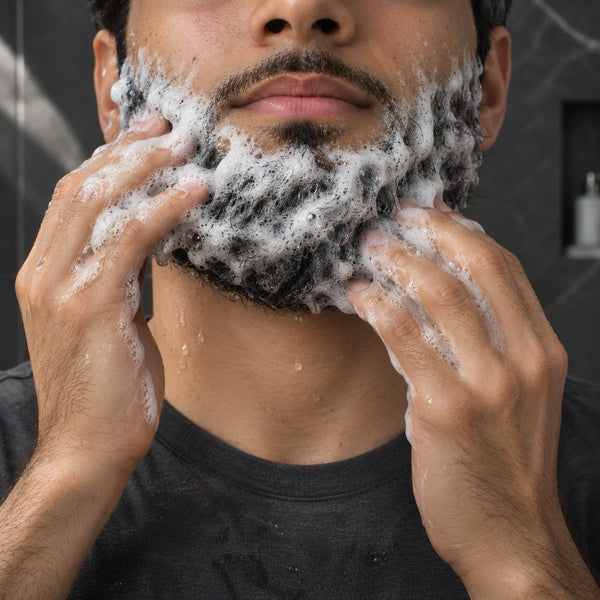
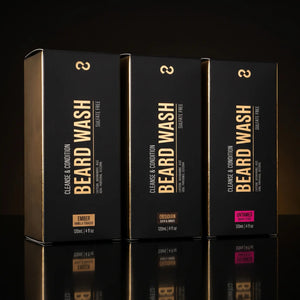
- Cleanse two to three times a week with a gentle sulfate-free wash. Our Beard Growth Wash ($39.95, Made in Australia) includes caffeine, niacinamide, aloe vera and panthenol. Find out what each ingredient does in our ingredient guide.
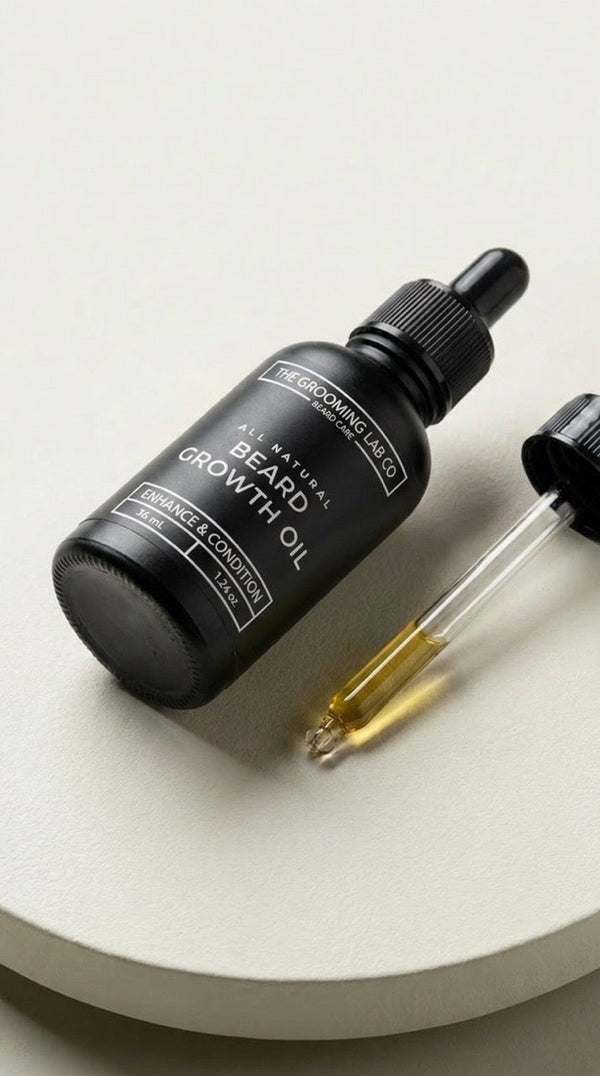
- Moisturise the skin and hair with Beard Growth Oil ($27.90). It contains jojoba, macadamia (a tree nut), vitamin E and zinc.
- Brush daily with a beard brush to spread oils and keep hair tangle-free.
- Style and condition with Beard Balm if you want hold and a tidier finish.
- Optional: a 0.5mm beard roller once or twice a week. Evidence for rollers on beards is limited, and results vary. Keep it clean, replace it as directed, and do not use it on broken, inflamed or infected skin. Our roller guide goes into detail.
All of these are available in the beard growth collection, or you can follow our wider complete beard care routine.
Are there treatments or supplements that change beard growth?
This is where honesty matters. Medications used for hair loss on the scalp are sometimes discussed for facial hair, but those are medicines that need a doctor's advice, and results and safety differ between people. We do not recommend or sell them, and you should speak with a GP or dermatologist before considering anything like this.
Over-the-counter supplements are a different story. Some people take biotin or multivitamins, but benefits are generally limited to people who are actually deficient. If your diet is varied and you are healthy, an extra supplement is unlikely to change your beard.
Anyone selling a pill, spray or serum that guarantees a thick beard is overpromising. Be sceptical, and protect your wallet and your skin.
How to be patient with your beard
The hardest part of a beard is the waiting. A few ideas that make the process easier:
- Take a photo in the same light every four weeks. Progress is hard to see in the mirror but obvious in a side-by-side.
- Set a trimming rule. No length trimming before week 8 to 12.
- Manage itch with a good wash and oil. If it lingers, read our guide on stopping beard itch and beardruff.
- Be realistic. If your beard stays sparse after six months of care, a neat short style is a good option, not a failure.
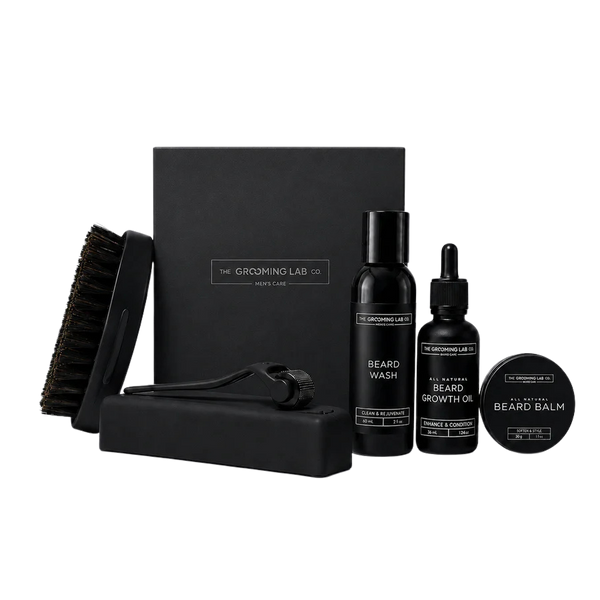
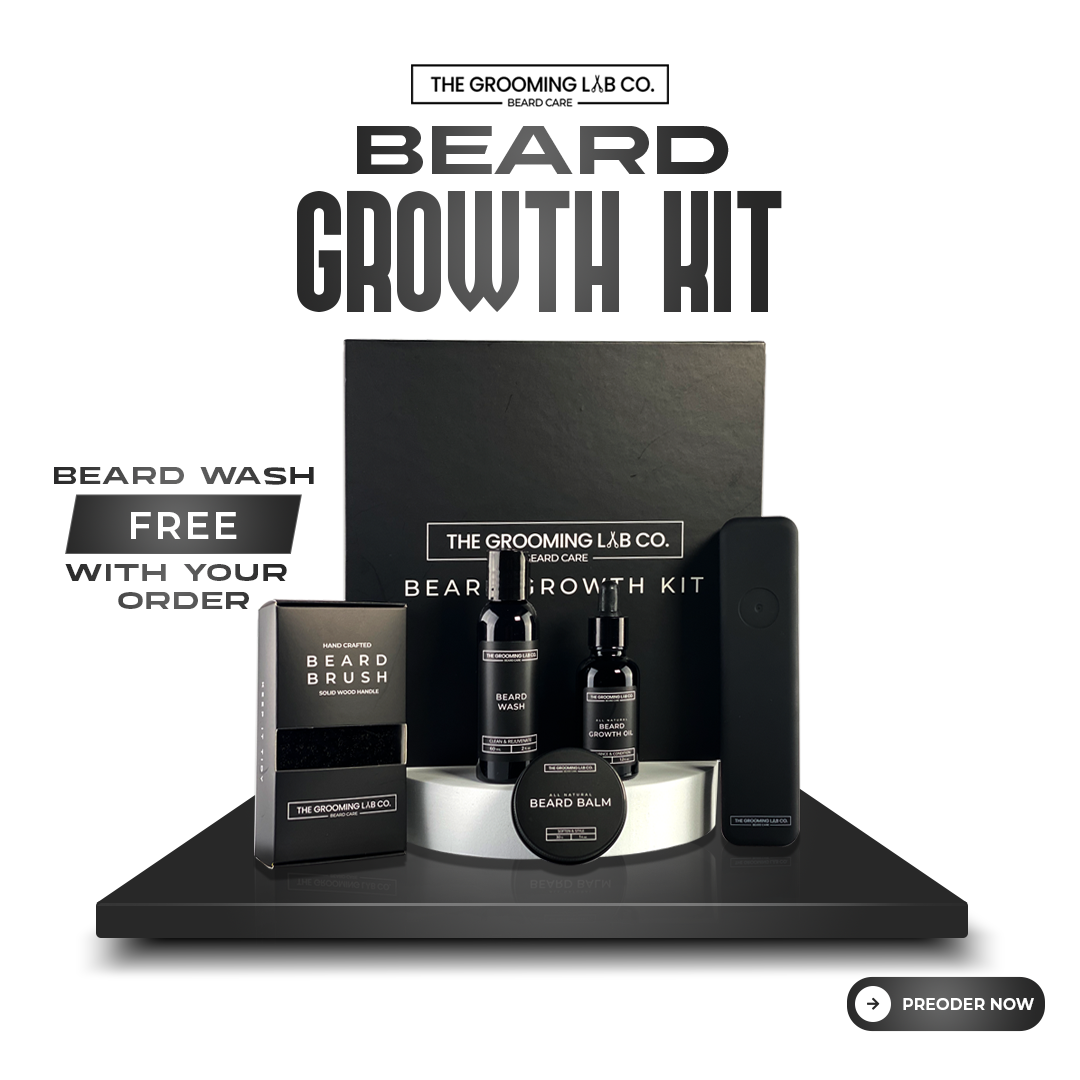
If you want everything in one box, the Beard Growth Kit includes a wash, oil, balm, roller and brush, from $89.90 for the 60-Day size. It is covered by our 150-day money-back guarantee, and orders over $100 ship free in Australia. Not sure what you need? The 60-second routine quiz will point you in the right direction.
How does beard growth work?
Beard hair grows from follicles that cycle through three stages: anagen (growth), catagen (transition) and telogen (rest). Androgen hormones, mainly testosterone and DHT, trigger fine facial hairs to become thicker beard hair at puberty. Genetics control how many follicles you have and how sensitive they are to those hormones.
What are the stages of beard growth?
The beard growth cycle has three stages. Anagen is the active growth phase, catagen is a short transition when growth stops, and telogen is the resting phase before the hair sheds. Each hair is at a different stage at any moment, which is why a beard grows unevenly and sheds a few hairs daily.
Does DHT make your beard grow?
DHT is a potent form of testosterone that helps turn fine facial hair into thicker beard hair during and after puberty. However, follicle sensitivity matters as much as hormone levels, and that is inherited. Higher hormone levels do not automatically mean a thicker beard, so speak to a GP if you have concerns.
Why does my beard stop growing at a certain length?
Beard hair has a short growth phase compared with scalp hair, so each strand reaches a genetically determined length before resting and shedding. That is why beards plateau. Keeping hair moisturised and detangled helps limit breakage so you keep the length you grow.
Can you change your beard genetics?
No. The number of follicles, their sensitivity to hormones and the length of the growth phase are inherited. What you can do is support skin and hair condition with a steady routine, good nutrition and sleep, and style the beard to suit your natural growth pattern.
Why is my beard patchy in some areas?
Uneven follicle density and different follicle maturity are the most common causes, and both are largely genetic. Age also matters, as many men fill in through their twenties and thirties. If you notice sudden round bald patches or inflamed skin, see your GP or dermatologist.
How long does it take for a beard to fully grow in?
Most men need three to six months of untrimmed growth to judge their beard. Some continue to thicken into their late twenties or thirties as hormones and follicle sensitivity change. Growth is rarely even, so expect stalls and bursts along the way.
Do beard growth products work?
Products cannot change genetics or the hair cycle. A routine with a gentle wash, moisturising oil, brushing and balm helps support healthy-looking skin and a fuller-looking beard by reducing dryness and breakage. Treat bold promises with caution, and speak to a GP if you have a skin or hormone concern.
This article is for general information about our products and ingredients. It is not medical advice. If you have a skin condition or allergies, talk to your doctor before using a new product.