
In this article
Beard oil is a thin liquid that conditions the hair and the skin underneath. Beard balm is a thicker, wax-based product that softens, tames flyaways and gives light hold. Short beards usually do well with oil alone, and longer beards often use both.
This guide covers what each one does, how they differ side by side, which beard lengths suit which, how to layer them, and how to adjust for Australian weather.
Oil is the conditioning layer and balm is the finishing layer. If your skin feels tight or your beard feels coarse, start with oil. If you have flyaways or want a neater shape, add balm on top. Use oil first, then balm, and use less of both than you think you need.
What is the difference between beard balm and beard oil?
Both are leave-in conditioners for your beard. They are built from different ingredients, so they feel and behave differently.
Beard oil is mostly carrier oils. It is thin, spreads easily and soaks in quickly, so it reaches the hair and the skin underneath. Beard balm combines butters, oils and wax. It is a soft solid that melts when you warm it in your hands, and it coats the outside of the hair, which is where the light hold comes from.
Grooming sources broadly agree on this split. The Beardbrand guide describes oil as light and quick to absorb, and balm as thicker, coating the hair and releasing moisture slowly. Note that Beardbrand sells both, so treat its product preferences with a pinch of salt.
Oil conditions. Balm finishes. One does not replace the other.
Beard oil and beard balm side by side
| Feature | Beard oil | Beard balm |
|---|---|---|
| Texture | Thin liquid | Soft, waxy solid |
| Main job | Conditions hair, helps skin feel comfortable | Softens, tames and lightly shapes |
| Hold | None | Light |
| Finish | Natural sheen | Soft, slightly matte to satin |
| Reaches skin | Yes, easily | Mostly sits on the hair |
| Best for | Stubble to medium beards, dry or tight skin | Medium to long beards, flyaways |
| Order | First, on a clean damp beard | Second, or on its own for a tidy finish |
What does beard oil do?
A good oil helps in a few practical ways. It helps hair feel softer and easier to brush, it helps the skin under the beard feel more comfortable, and it takes the edge off frizz. The American Academy of Dermatology lists beard oil among its suggestions for moisturising a grown-in beard, and says moisturising helps with dryness, flaking and itch.
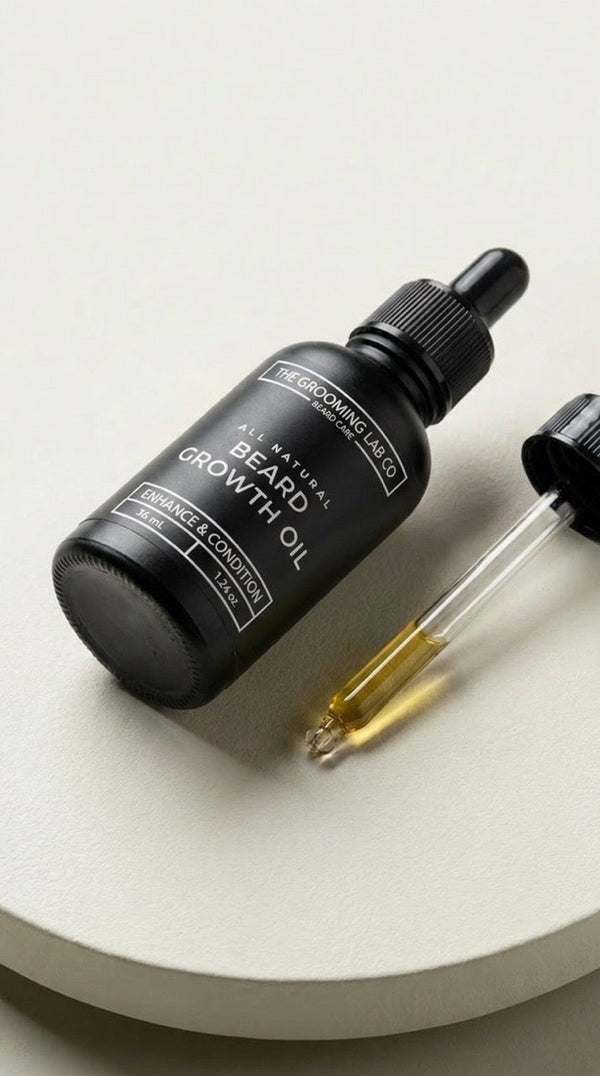
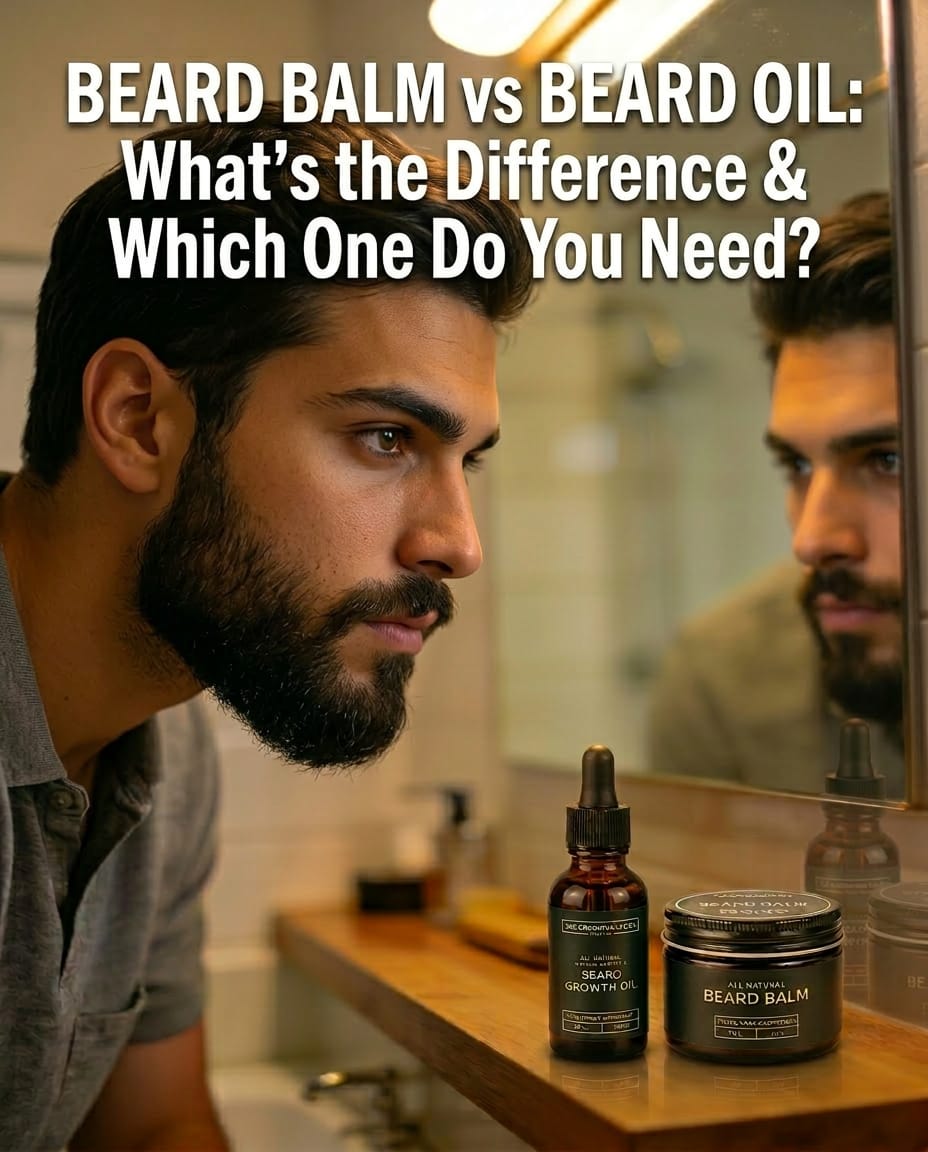
Our Beard Growth Oil (30ml) is made with jojoba oil, macadamia oil, vitamin E and zinc. Macadamia is a tree nut, so check the label if you have a nut allergy.
To be clear about what oil can do: it is a conditioning product. It supports healthy-looking skin and a fuller-looking beard by keeping hair in good condition. It does not change genetics, and no oil can promise new growth. Beardbrand also notes that oils marketed purely as growth products lack scientific support, which is a fair point to keep in mind with any brand.
What does beard balm do?
Balm gives your beard some shape and staying power. The wax and butters weigh stray hairs down, keep the outline tidy and form a light layer on the hair that helps it feel conditioned for longer.
It will not set a beard like a gel. It helps the beard sit where you put it. Our Beard Balm (30ml) uses shea butter, beeswax, jojoba, argan and sweet almond oil with vitamin E, and has a light hold. Sweet almond is a tree nut, so check the label if you have a nut allergy, and patch test if your skin is sensitive.
Which do you need for your beard?
It depends on length, texture and what bothers you most.
Oil only
There is not enough length for balm to shape. The main concern is the skin underneath, and a few drops after washing covers it.
Oil, plus a little balm
Oil keeps hair and skin comfortable, and a small amount of balm keeps the shape tidy through the day.
Both, balm on the ends
Long hair is older hair and tends to be driest at the ends. Oil for the skin, balm for the mid-lengths and tips.
Oil, light hand with balm
Heavy balm can weigh fine hair down. Start with oil and use only a trace of balm if you need control.
On patchy beards, balm can help the beard look more even because it lays hair in one direction. That is a styling effect, not a change in how much hair you have. Genetics, age and hormones decide density, and results vary from man to man.
How do you layer beard oil and balm?
Order matters. Oil is thin and needs to reach the skin. Balm sits on top and seals the surface.
Wash and pat dry
Your beard should be clean and slightly damp, not dripping.
Apply oil
Rub 3 to 4 drops into your palms for a short beard, or up to 6 to 8 for a long one. Work it in from the skin outwards.
Give it a minute
This lets the oil settle so the balm does not slide over wet hair.
Warm the balm
Rub a pea-sized amount between your palms until it turns glossy and soft.
Apply and shape
Work it through, concentrating on the ends, then comb or brush into place.
If you are unsure how much to use, start with half. It is far easier to add a little more than to take product out of a beard that already looks wet.
Where this sits in a full routine is covered in our complete beard care routine, and our guide on how to choose a beard oil goes deeper on oils.
Which is better for dry skin and beard itch?
Oil is usually the first thing to try. It is lighter, spreads over skin more easily and goes right where the dryness is. The AAD advises not skipping moisturiser, even with oily skin, because it softens skin and hair and reduces dryness and flaking.
Itch has many causes though. Over-washing, harsh products, cold dry air and poor rinsing can all play a part. Our guide to stopping beard itch and beardruff covers them.
Ohio State's Wexner Medical Center notes that red, flaky, itchy skin can be seborrheic dermatitis, which sometimes needs medicated treatment. If your skin is red, heavily flaking, painful or not improving, stop new products and speak to your GP or a dermatologist. A grooming routine is not a substitute for medical advice.
One more practical point: how much beard you have changes how much product you need. A short beard may only need a few drops of oil, while a long one soaks up more and needs the balm worked through to the ends. Start small, check the mirror after a few minutes, and add a little more only if the hair still feels dry. Many men find that after a week or two of paying attention, they settle on an amount that stays the same.
Skin type matters too. If your skin runs oily, you may find oil alone feels like plenty, and balm only goes on the lower, longer sections. If your skin is dry, oil goes on a little more generously. Neither is wrong. The aim is a beard that feels soft rather than slick, and skin that feels comfortable rather than tight.
How should you adjust for Australian weather?
The principle is simple: use less in heat and humidity, and a bit more when the air is cold and dry.
What are the most common mistakes?
Do
- Start with a clean, slightly damp beard.
- Put oil on first, working it down to the skin.
- Use a pea-sized amount of balm and warm it fully.
- Wash regularly so product does not build up.
Don't
- Use too much. A wet, clumpy look means too much product.
- Put balm on before oil, because oil cannot get through the wax.
- Apply to a dry, unwashed beard, which traps dirt.
- Expect a fuller beard overnight.
What is the simplest way to get both?
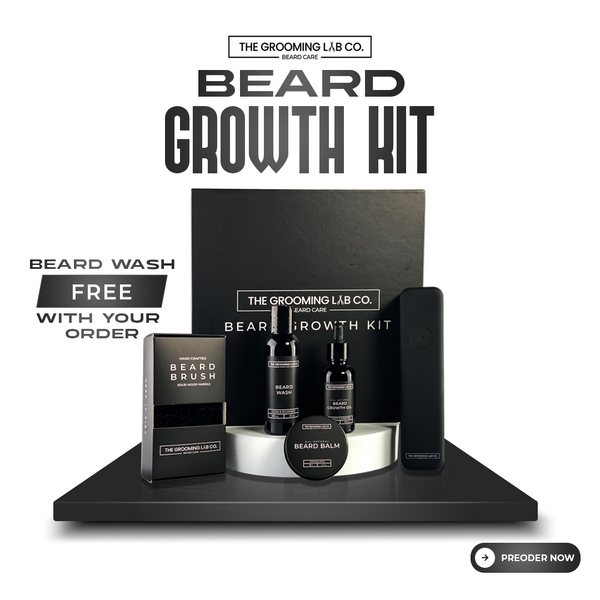
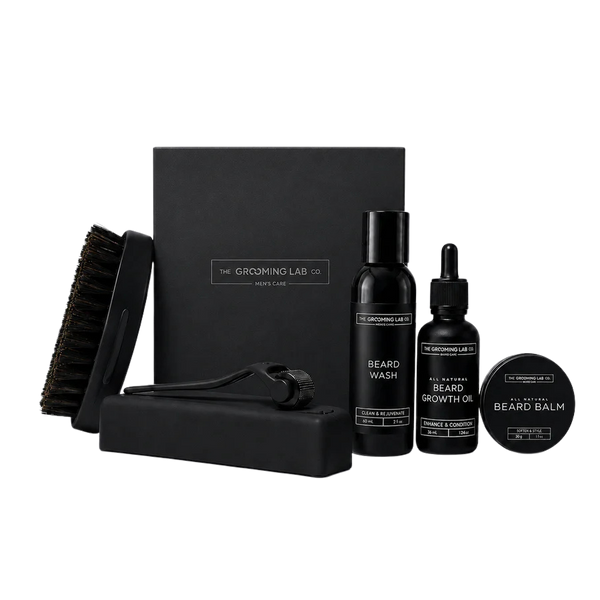
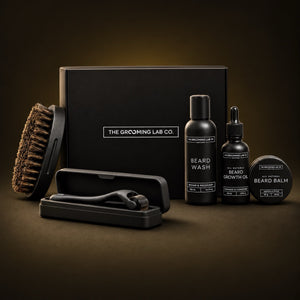
If you want oil, balm and the rest of the routine without picking each piece, the Beard Growth Kit includes a beard wash, growth oil, balm, 0.5mm roller and brush, in 60, 90 and 120-day sizes. It carries a 150-day money-back guarantee. The roller is optional, and evidence for rollers is limited, so our honest look at beard rollers is worth a read first.
If you prefer to build up gradually, begin with the oil and add the balm when your beard needs shaping. New to all of this? Our beginner guide covers what to buy first, or take the free 60-second routine quiz. Single products can be returned unused and unopened within 14 days of delivery.
Can you use beard balm without beard oil?
Yes. Balm is a conditioner in its own right, and many men with short or medium beards use balm alone for a soft finish with light hold. If your skin feels dry or tight, add a few drops of oil first, since oil is better at helping the skin underneath feel comfortable.
Do you apply beard oil or balm first?
Oil goes first. Apply it to a clean, slightly damp beard and give it a minute to settle. Then work in a pea-sized amount of balm on top. The wax in balm sits on the surface of the hair, so applying it first would block the oil from reaching the skin.
Is beard oil or balm better for a short beard?
Oil is usually the better pick for stubble and short beards. It conditions the hair and helps the skin underneath feel comfortable. There is rarely enough length for balm to shape, so you can add it later when your beard grows and needs a little more control.
How often should you use beard oil and balm?
Most men apply oil once a day after washing, and balm once a day or as needed for neatness. Cold, dry weather may call for a little more, and hot, humid days for less. If your beard looks heavy or greasy, cut back the amount you use.
Can beard oil and balm help with beard itch?
They can help skin feel more comfortable, especially when dryness is the cause. Oil is usually the first step. If itch is persistent, red or painful, it may be a skin condition or allergy, so see your GP or a dermatologist rather than adding more products.
Will beard oil or balm make my beard grow faster?
No. Beard growth is driven mainly by genetics, age, hormones and diet. Oil and balm keep hair conditioned and skin comfortable, which supports a healthy-looking, fuller-looking beard. They are a routine step, not a way to change how fast or how much hair you have.
Are your beard oil and balm safe if I have a nut allergy?
Our Beard Growth Oil contains macadamia oil and our Beard Balm contains sweet almond oil, both tree nut ingredients. If you have a nut allergy or sensitive skin, check the ingredient list and patch test, or ask your GP before use.
This article is for general information about our products and ingredients. It is not medical advice. If you have a skin condition or allergies, talk to your doctor before using a new product.