

In this article
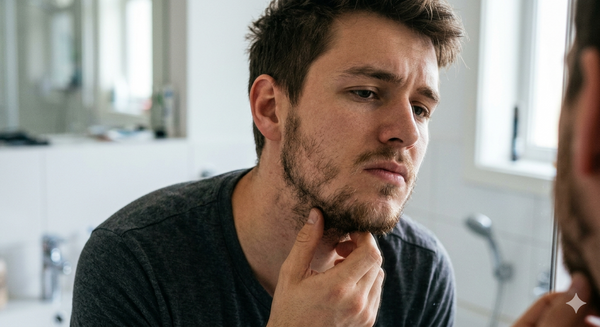
Yes, a patchy beard is normal, and cheeks are the most common spot for it. For most men it comes down to genetics, age and how your follicles respond to hormones, not anything you did wrong.
This guide covers why cheeks tend to fill in last, the other possible causes, how to tell "patchy" from "still early", how long to wait, what genuinely helps, and when it is worth seeing a GP.
Beard density is mostly inherited, and cheeks are often the slowest area to fill. Many beards keep thickening into the 30s, so give it a few months of untouched growth before you judge it. Time, skin care and a style that works with your pattern help. Nothing can create follicles you don't have, and sudden or circular bald spots are worth a check with a doctor.
Is a patchy beard normal?
Very. Uneven growth is one of the most common beard complaints, and plenty of men with a good full chin and moustache have thin cheeks. Hair density, thickness and where it grows are largely down to your family, so your dad and granddad are a decent hint at what to expect.
Normal does not mean fixed, though. Some patchy beards fill in with time, and some stay as they are. The honest bit: nobody can tell you which one yours will be from a photo.
Why are cheeks usually the last to fill in?
Facial hair growth depends on how your follicles respond to androgens, particularly DHT. Healthline explains that sensitivity to DHT matters more than your overall hormone level, which is why two men with similar testosterone can grow very different beards.
One explanation you will see is that cheek follicles are simply less responsive than the ones on the chin and above the lip. That is a plausible idea rather than a settled fact, so treat it as one explanation, not the rule.
Age plays a part too. The same Healthline article notes that most men see their beards keep thickening into their 30s, and that men in their 20s may see fuller growth as they get older. If you are 19 and staring at bare cheeks, you may simply be early. Our piece on the science behind beard growth goes deeper on the follicle cycle.
The main causes in plain English
Several things can sit behind a patchy beard. Most men have one or two of them, and genetics is nearly always on the list.
Genetics
Follicle density and distribution are inherited. This is the big one, and it is not something a product changes.
Age
Beards tend to thicken through the 20s and 30s. Early growth is often not the final picture.
Hormones
Follicle sensitivity to DHT matters. Clinically low testosterone may also limit growth, but Healthline notes normal levels are probably not the cause.
Medical conditions
Alopecia areata can cause round or oval bald patches in the beard, and skin or fungal conditions can also affect hair in an area.
Nutrition and stress
Healthline lists nutrient deficiencies and very low protein intake as possible limits on growth. If you suspect your diet is thin, a GP can check rather than you guessing at supplements.
Over-trimming
Cutting before the beard has had a chance to fill makes it hard to see what you really have.
Is it patchy, or just the awkward stage?
This is where most guides stop short. Here is a simple checker. The more of these that apply, the more likely you are just early.
- You are in your late teens or 20s.
- You have been growing for under three months without trimming.
- The gaps are patches of finer, shorter hair rather than completely bare skin.
- Relatives on your dad's or mum's side filled in later in life.
- The patchiness is even and gradual, not sudden.
If you tick most of those, you are probably in the awkward stage. Our guide on how long it takes to grow a beard maps out what each stage usually looks like. If the skin is smooth and the gaps are round and sharp-edged, skip ahead to the doctor section below.
How long should you wait before deciding?
Sources disagree a little. The Manual quotes a barber who recommends a full two months before trimming so uneven areas can catch up. Philips suggests around three months before judging the result, and some brands use a 90 to 120 day rule. Others say a beard can keep changing for a year.
A sensible middle ground is three to four months of growth without shaping the cheeks. After that you will know your pattern far better than you do today.
Patchiness looks worst
Hair is short and uneven. Leave it alone and keep the skin clean and moisturised.
Gaps start to show their shape
Stronger areas catch up. Brush the hair in the direction it grows and note where it is genuinely thin.
Time to decide on a style
Now you can pick a length and outline that works with your pattern.
Keep watching, not worrying
Some beards keep filling for years. Check in every few months rather than daily.
What genuinely helps
Here is the honest list. It is shorter than most product pages make it sound.
- Time. It does more than anything else.
- Healthy skin. The Manual's barber stresses that healthy skin supports the hair, so keep the area clean and moisturised.
- A style that works with your growth. Short stubble, a goatee or a clean cheek line can look deliberate. Our beginner's beard care guide covers the basics.
- A steady routine. Washing, oiling and brushing keeps the hair you have looking its best and helps it feel softer.
What can't be fixed: you cannot create follicles that are not there. Products can help the beard you have look fuller and healthier, but they do not change your genetics.
Take a photo in the same light every two weeks. Patchiness is hard to judge in the mirror day to day, and a photo makes slow progress visible.
Things that don't help or waste money
Do
- Let the beard grow for a few months before trimming the cheeks.
- Moisturise the skin underneath.
- Keep a simple, consistent routine.
- Choose a style that suits where you grow hair.
Don't
- Shave to "make it thicker". Healthline notes shaving does not change thickness.
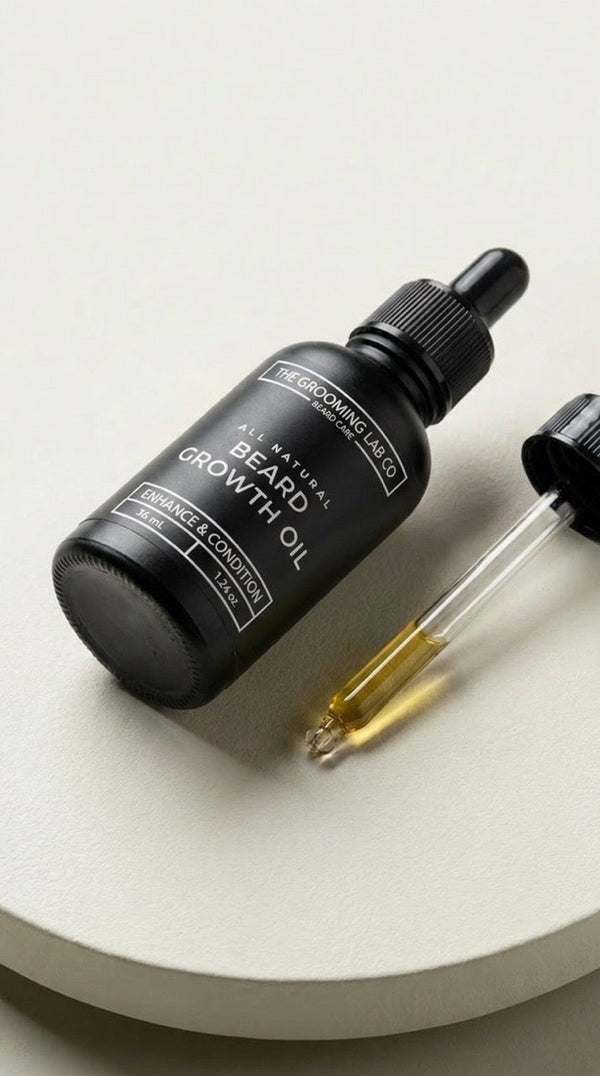
- Expect beard oil to change growth. It adds gloss, which can make a beard look fuller.
- Buy anything that promises to grow hair where you have none.
- Start prescription treatments without talking to a GP or pharmacist.
On minoxidil and supplements, sources disagree about how much they help, and the evidence is mixed. We are not going to recommend either here. If you are curious, talk to a GP or pharmacist.
When to see a GP
Sudden patchy loss in a beard that was full, round or oval bald patches, redness, scaling, itching or burning, pain, or hair loss elsewhere on your body. The American Academy of Dermatology notes that alopecia areata can affect the beard and often starts as a round or oval bald patch. A doctor can tell you what is going on.
If you also have other symptoms such as low energy or low sex drive, mention them. A GP can check for underlying causes in a way no article can.
Styling around the patches while you wait
You do not have to hide until month four. A few simple choices make an uneven beard look deliberate.
- Keep the length short and even. The patchier the beard, the shorter it usually looks best. Even stubble blurs small gaps.
- Leave the cheeks alone, tidy the edges. A clean neckline and cheek line make the beard look intentional while the middle fills in.
- Use the strong areas. If your chin and moustache are your best growth, a goatee or chin-focused style puts them to work.
- Brush. A beard brush trains hair to lie in one direction and spreads oil, which can make coverage look more even.
Concealers and fillers exist too. They are temporary and cosmetic, and a barber quoted by The Manual suggests filling spots rather than colouring the whole face, since full coverage can look fake.
A routine that supports what you have
A routine will not rewrite your genetics, and we won't pretend otherwise. What it can do is keep skin healthy and help the hair you have feel softer and look fuller. Our complete beard care routine walks through the steps.
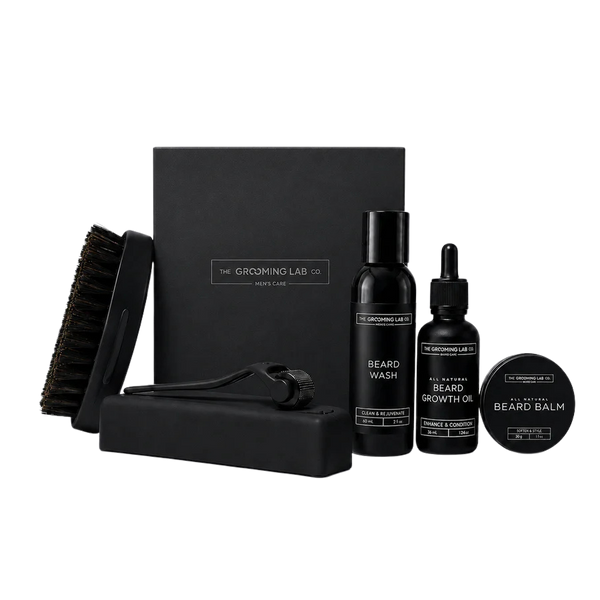
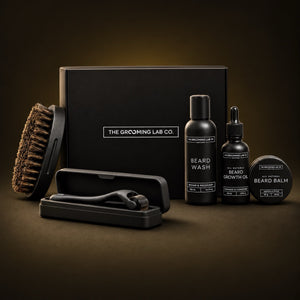
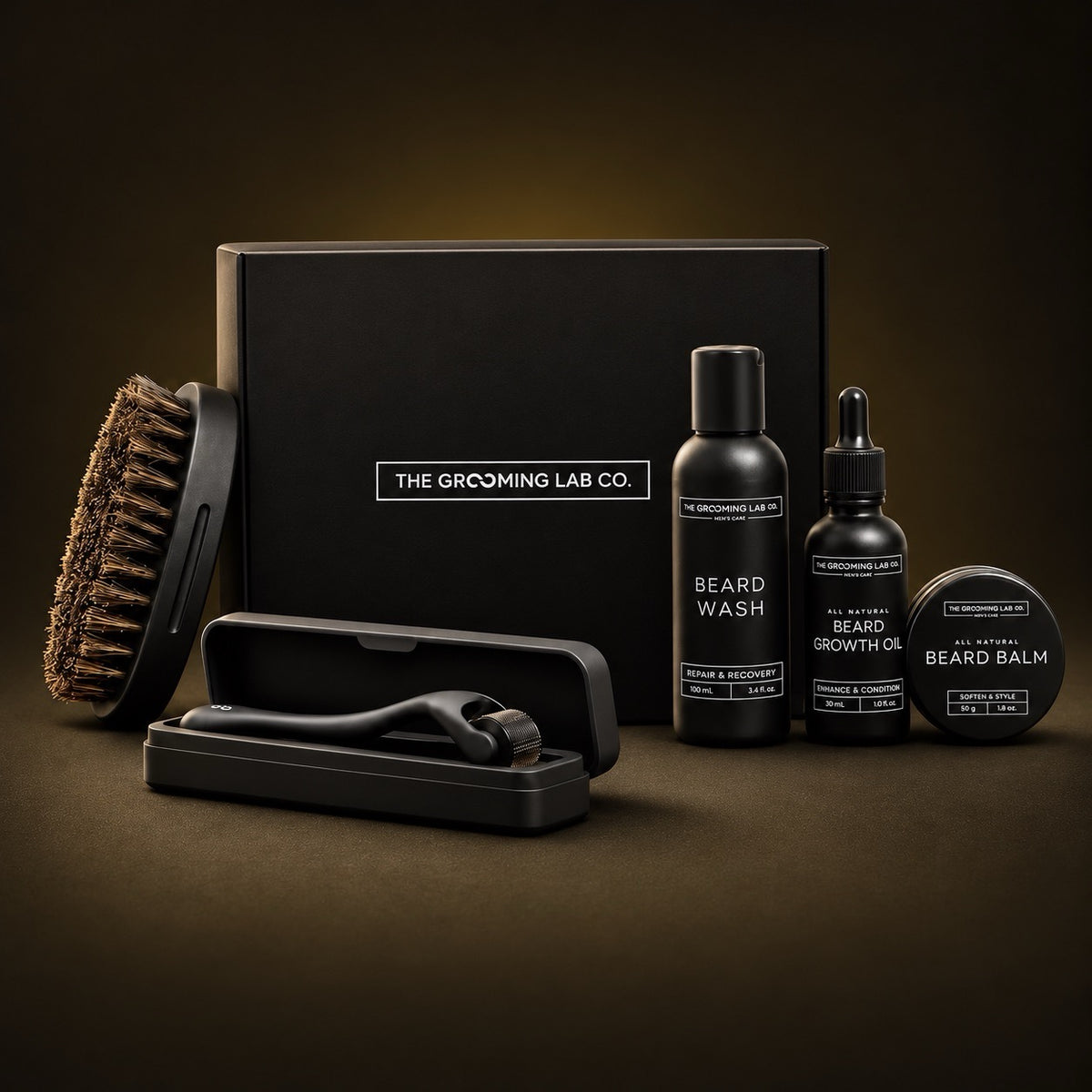
If you want it bundled, the Beard Growth Kit is a four-step routine of roller, oil, balm and wash plus a brush. It has no minoxidil and needs no prescription. Results vary, and genetics, age and hormones still decide how your beard grows.
Is a patchy beard normal?
Yes. Patchy growth is very common, especially on the cheeks. Beard density, thickness and pattern are largely inherited, and many beards keep filling in through the late 20s and into the 30s. Normal does not guarantee it will fill in fully, but it does mean you are not doing anything wrong.
Will my beard fill in?
It might. Many men see their beards keep thickening into their 30s, so early patchiness is not always final. Genetics, age and hormones decide how far it goes, and results vary. Give it three to four months of growth without trimming the cheeks before you judge, then check in every few months.
Why is my beard patchy on one side?
Some asymmetry is normal, as hair growth is rarely perfectly even. Differences in follicle density, hair direction and even sleeping or resting habits can make one side look thinner. If one side suddenly loses hair, or you see round bald patches, see a GP or dermatologist to rule out a medical cause.
Does shaving make a beard thicker?
No. Shaving cuts hair at the surface and does not change how many follicles you have or how thick the hair grows. Fresh stubble can feel coarser because the tip is blunt, which is where the myth comes from. Shaving patchy areas mainly changes the look, not the growth.
Can beard oil fix patches?
No. Beard oil can make hair feel softer and look glossier, which can make a beard look fuller, and it helps keep the skin underneath comfortable. It does not create new follicles or change genetics. Think of it as good maintenance for the beard you have, not a way to fill gaps.
How long should I wait before deciding my beard is patchy?
Sources vary. Some barbers suggest about two months, some brands suggest three months, and others use a 90 to 120 day rule. Three to four months of untouched growth is a sensible middle ground. After that you can see your real pattern and choose a style that suits it.
When should I see a doctor about a patchy beard?
See a GP or dermatologist if patchy loss is sudden, if you notice round or oval bald spots, or if there is redness, scaling, itching, burning or pain. Hair loss elsewhere on the body is also worth mentioning. A doctor can check for conditions such as alopecia areata or skin problems.
This article is for general information about our products and ingredients. It is not medical advice. If you have a skin condition or allergies, talk to your doctor before using a new product.